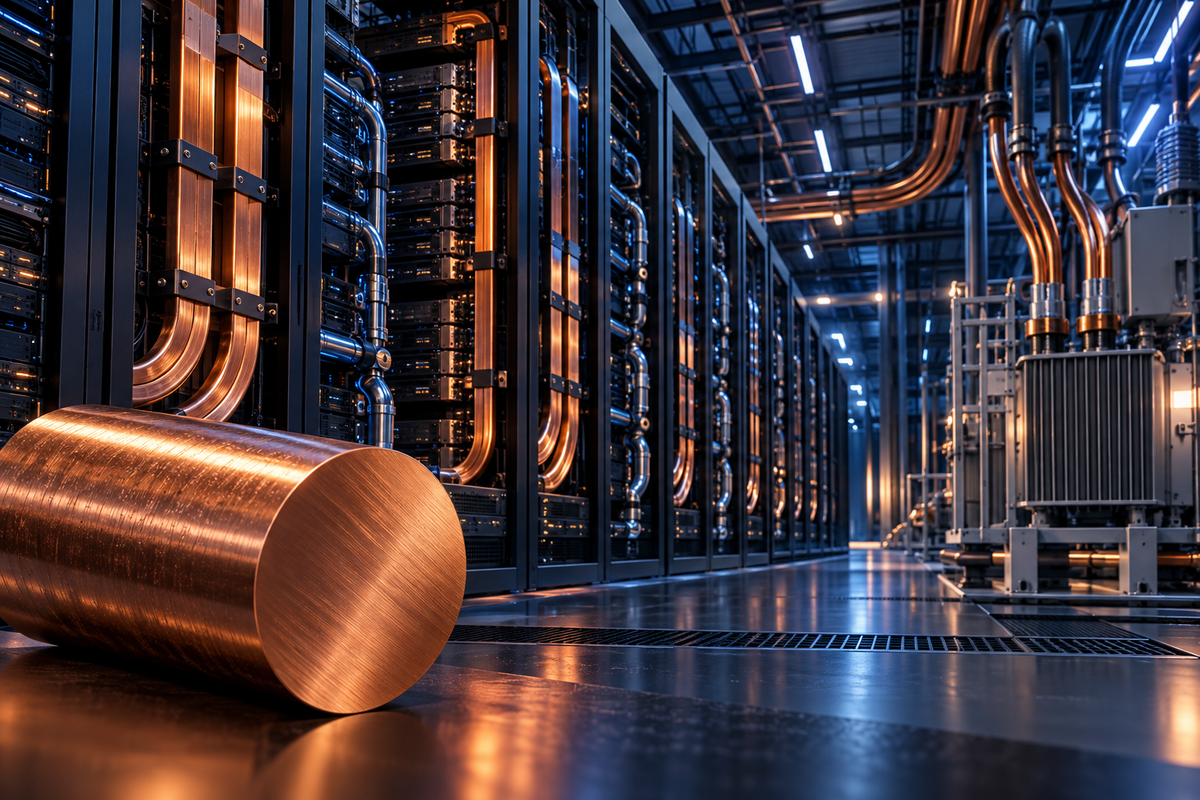
Artificial intelligence may feel like software, but the infrastructure behind it is intensely physical. AI models run in data centres filled with servers, networking equipment, power systems and cooling technology—and copper connects much of it.
Electricity demand is accelerating
The International Energy Agency expects global data-centre electricity consumption to more than double to around 945 terawatt-hours by 2030, with AI the most important driver of that increase. AI-optimised data-centre electricity demand is projected to grow even faster.
Where copper is used
Data centres need copper in cables, busbars, transformers, switchgear, motors, backup power systems, heat exchangers and equipment connections. More capacity can also require stronger local transmission and distribution networks beyond the data-centre fence.
AI is part of a larger trend
Data centres do not consume copper in isolation. Grid expansion, electric vehicles, renewable generation, storage and conventional construction are all competing for the same globally traded metal. The IEA describes copper as a cornerstone of electricity-related technologies.
Efficiency will matter
Engineers can reduce material intensity through better design, alternative conductors in some applications, higher utilisation and recycling. Even so, building large concentrations of reliable electrical infrastructure requires substantial physical materials.
For copper collectors, the AI story is a reminder that copper is not merely a historic metal or decorative collectable. It remains central to the modern electrical world. Industrial demand can influence the underlying metal market, while a collectable piece also carries design, condition and mintage considerations.