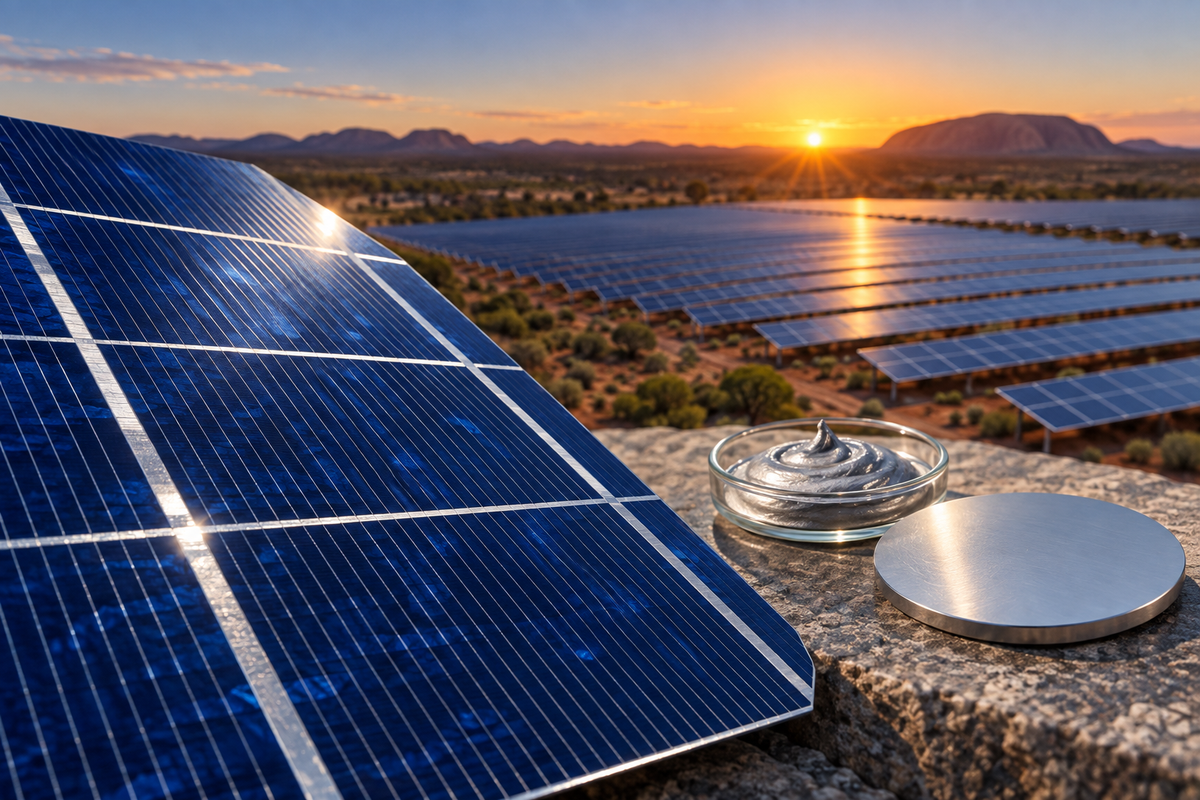
Silver is best known to many collectors as a precious metal, but it is also an important industrial material. One of its most visible modern uses is inside photovoltaic solar cells.
Why solar cells use silver
Silver has exceptionally high electrical conductivity. In many crystalline-silicon solar cells, silver-containing paste is printed onto the cell to form fine conductive contacts. Those contacts collect the electrical current created when sunlight energises the semiconductor.
A small amount across enormous scale
Each panel uses only a limited amount of silver, and manufacturers continually work to reduce that amount through thinner contacts and new cell designs. This process is called thrifting. But global solar manufacturing operates at such a large scale that photovoltaic demand remains important to the silver market.
Growth and efficiency pull in opposite directions
More installed solar capacity tends to raise total material demand, while lower silver use per cell works in the other direction. The balance changes as technologies and production volumes evolve. The International Energy Agency has warned that rapid solar growth can create material-supply challenges even as manufacturers improve efficiency.
Recycling is part of the future
Solar modules have long operating lives, so much of today’s installed silver will not return to the recycling stream for years. Better recovery from retired panels could eventually reduce pressure on primary supply, but collection and processing need to be economical at scale.
For collectors, solar is a useful reminder that silver sits in two worlds: it is both a precious metal with thousands of years of cultural history and a functional material used in advanced electrical technology.
Source: IEA Solar PV Global Supply Chains · Silver Institute industrial-demand report