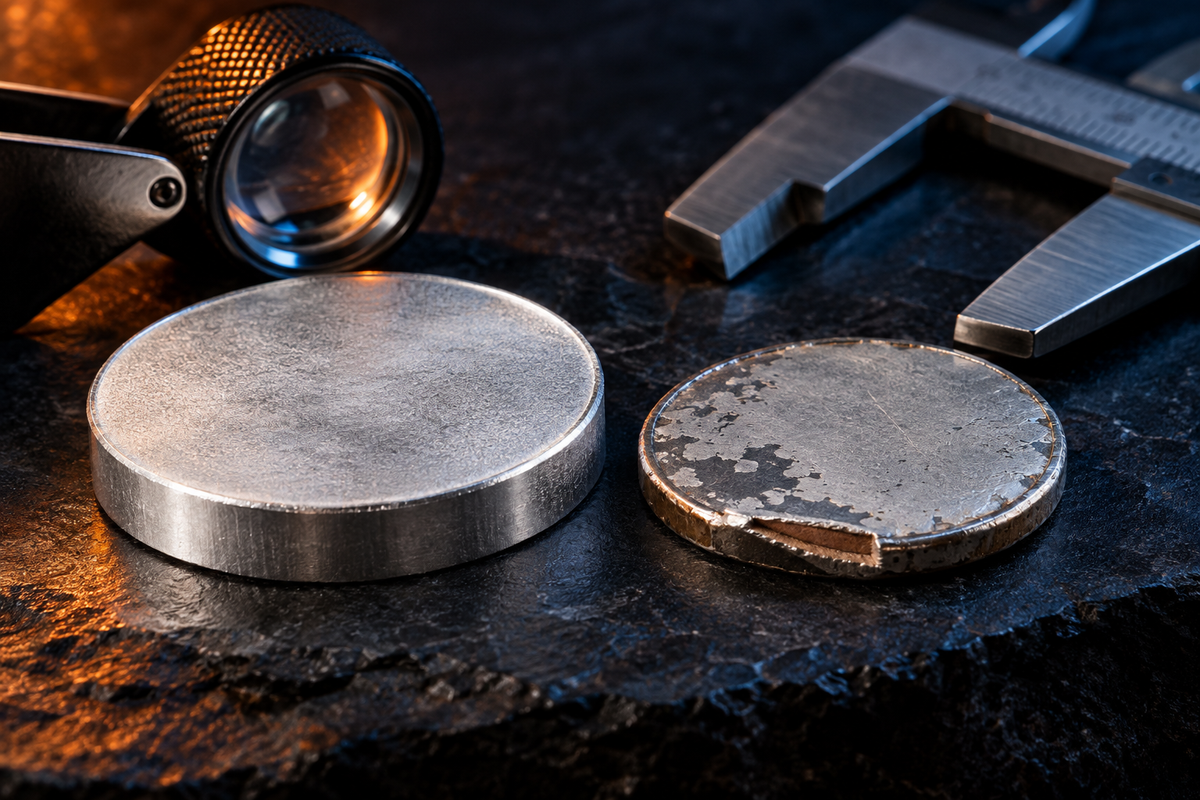
A silver-coloured or copper-coloured surface does not prove that an item is solid silver or copper. Plating can give a base-metal object a convincing outer appearance.
Start with the description
Reliable listings clearly state whether a piece is solid metal, plated or simply coloured. Terms such as “silver tone” do not mean silver content.
Weight and dimensions
Density differences can reveal inconsistencies when accurate dimensions and an expected specification are available. Magnets may identify some base metals, but a non-magnetic result does not prove precious-metal content.
Inspect wear points
Edges, high points and scratches may expose a different colour beneath plating. However, destructive scratching is unsuitable for collectables and should not be used casually.
Professional composition testing
XRF analysis can examine surface composition without damaging the item. Results still need knowledgeable interpretation, particularly with thick plating or layered objects, but testing adds much more information than colour alone.